

At a glance
Quick answer
At a constant 20 kW output, 20 minutes gives 6.67 kWh at the charger output. Added range depends on the EV and the conditions. RACV's June 2026 trial announcement states about 1 km per minute, or about 20 km in 20 minutes. This is a stated trial estimate, not a TAICO performance guarantee.
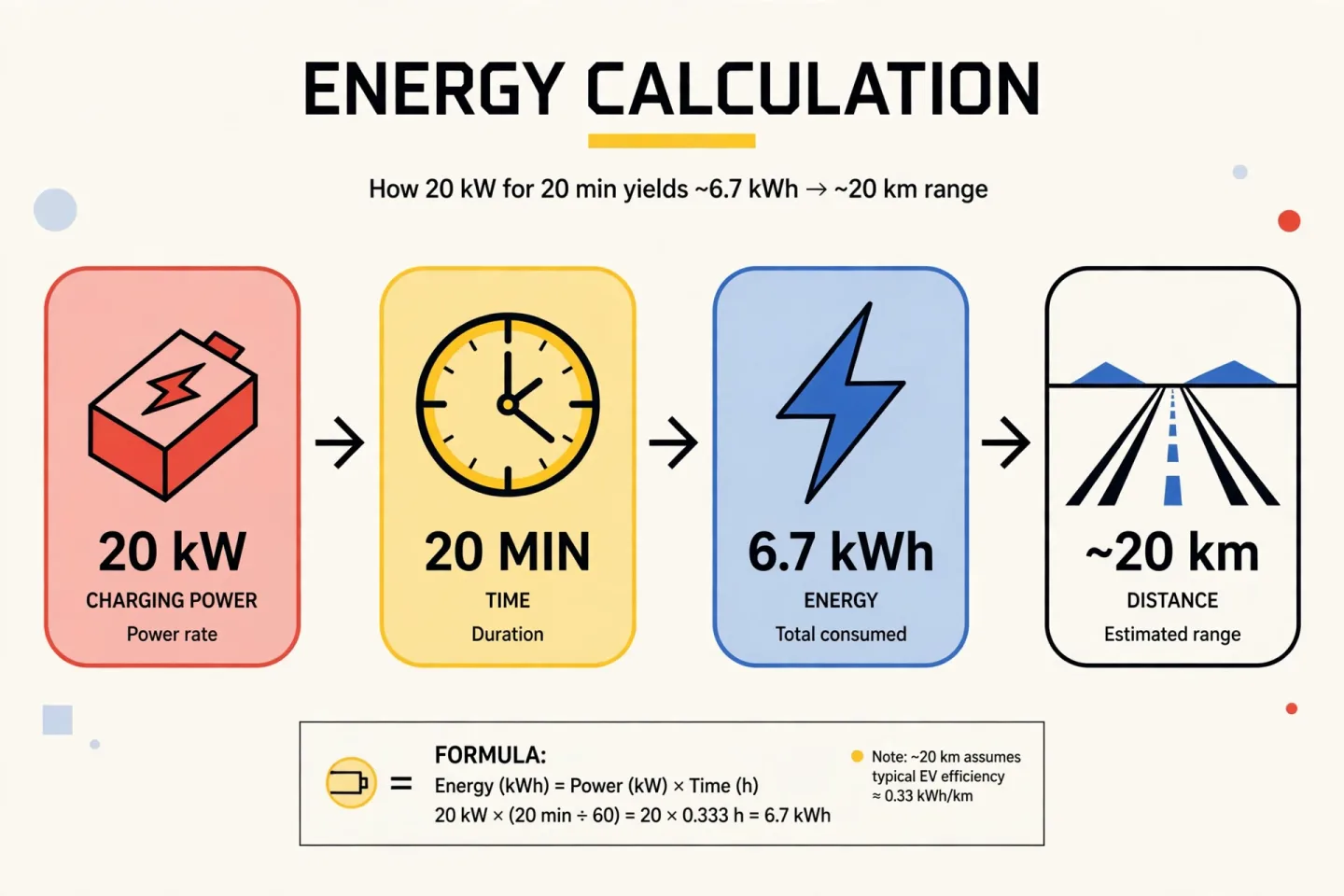
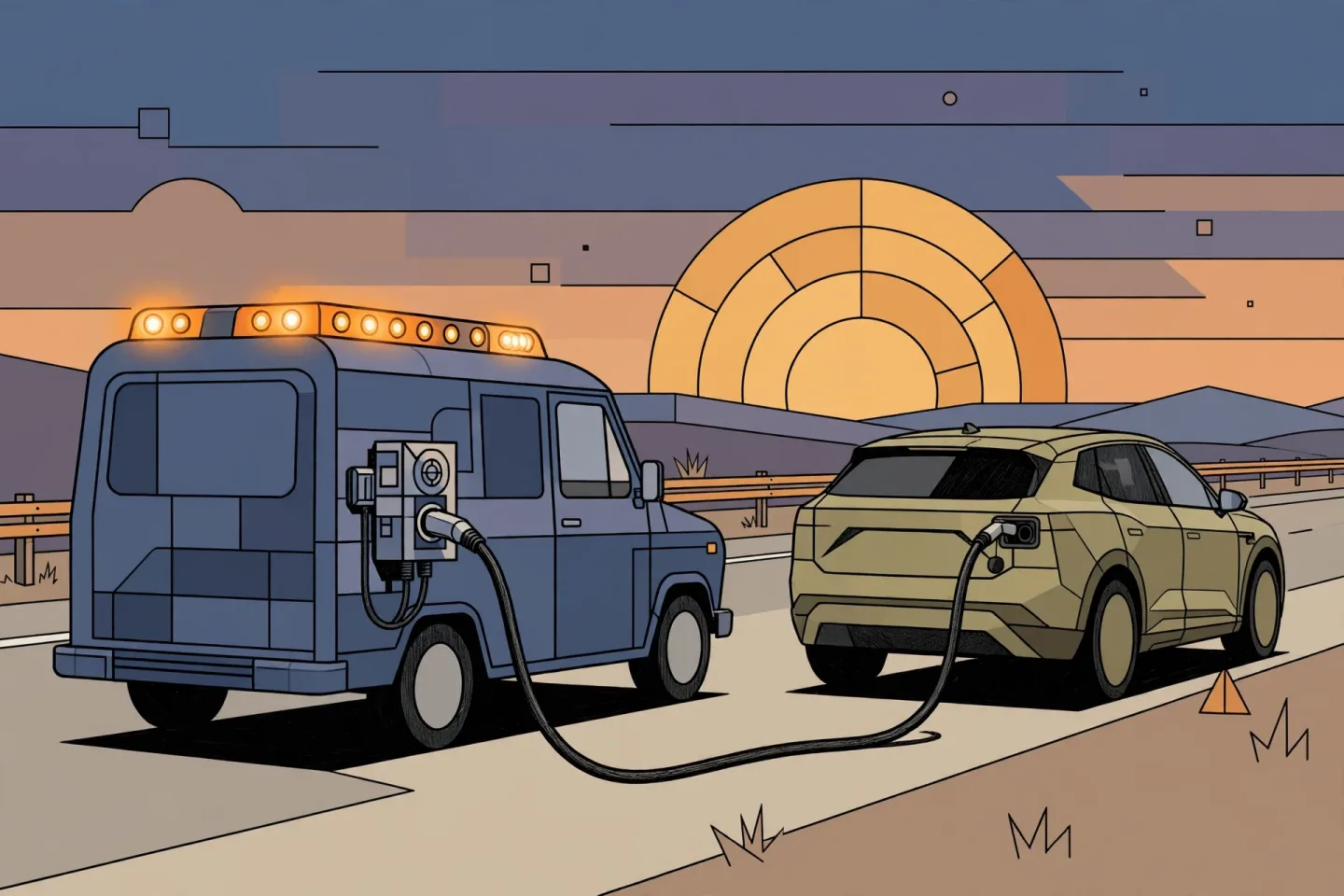
A 20kW mobile DC charger can supply energy to an EV with insufficient battery energy. The purpose of roadside EV charging is to help the vehicle reach a suitable charging point. The required range must match the route.
Use this guide with the mobile EV charging solutions for roadside assistance page to plan an equipment request.
What is a mobile EV charger for roadside assistance?
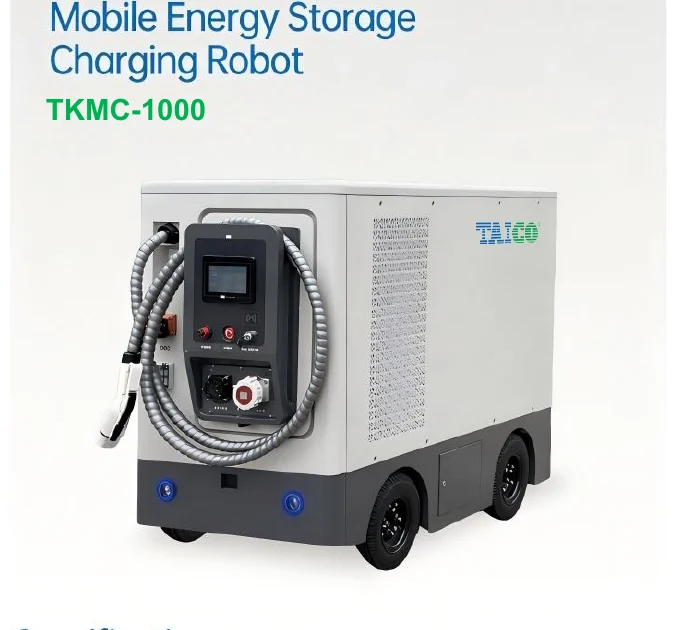
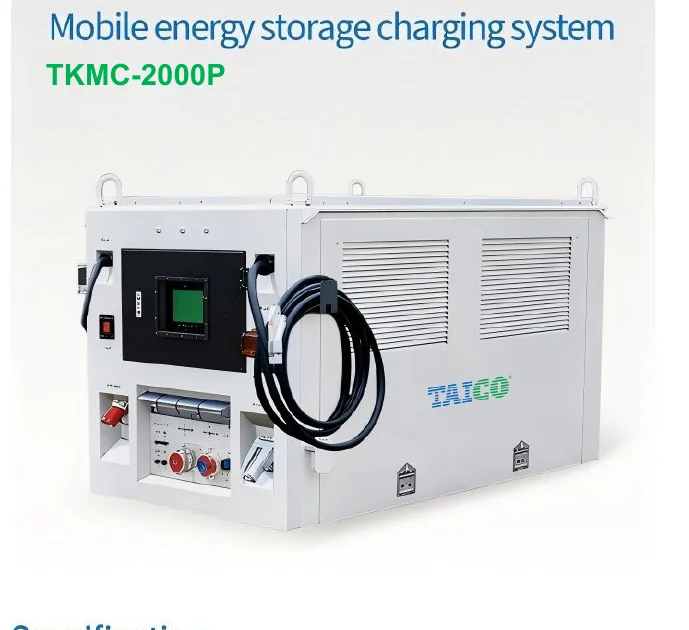
A battery-powered mobile EV charger carries stored energy to the vehicle. It can travel in a service van or on a suitable recovery vehicle. It supplies DC power through a compatible connection.
Roadside assistance providers, automobile clubs, recovery companies, and fleet operators can use this equipment for vehicles with insufficient energy. Before dispatch, confirm that the EV can charge and that the location is suitable. See the roadside EV charging workflow for planning inputs.
The calculation: 20 kW × 20 minutes
Power is the rate of energy transfer. Energy is power multiplied by time:
Energy (kWh) = average output power (kW) × charging time (hours)
At a constant 20 kW output:
20 × (20 ÷ 60) = 6.67 kWh
This is energy at the charger output. It is not a guaranteed increase in energy stored in the EV battery. It assumes 20 minutes of active charging. Arrival, connection, session start, and disconnection take additional time.
If average output falls to 15 kW, the same session supplies 5.0 kWh. Use average delivered power, not only the maximum rating, in an operating plan. The kW vs. kWh guide explains the two units.
How does energy become added driving range?
Use energy available for driving and expected vehicle consumption:
Added range (km) = usable added energy (kWh) ÷ consumption (kWh/100 km) × 100
These examples use the full 6.67 kWh output value. They do not deduct vehicle losses or auxiliary use. Consumption values are calculation inputs, not assigned vehicle classes or tested TAICO results.
- At 15 kWh/100 km: approximately 44 km (27 miles).
- At 18 kWh/100 km: approximately 37 km (23 miles).
- At 20 kWh/100 km: approximately 33 km (21 miles).
- At 25 kWh/100 km: approximately 27 km (17 miles).
- At 33 kWh/100 km: approximately 20 km (12 miles).
For an example with less usable energy, 6.0 kWh ÷ 20 × 100 = 30 km. The 6.0 kWh input is hypothetical. It is not a measured efficiency value.
The supplied diagram uses 0.33 kWh/km, which is 33 kWh/100 km. This explains its 20 km result. Do not use that value as a universal EV average.
What does RACV state about its 20kW trial?
In its June 2026 announcement of a mobile DC charger trial, RACV describes a 20 kW charger in one Melbourne patrol van. It states an expected range increase of about one kilometre per minute. At that rate, 20 minutes would add about 20 km.
The announcement says the trial will assess demand, performance, and operational fit before a wider rollout. It does not provide completed trial measurements. Treat the figure as RACV’s stated estimate for that trial. RACV is an external industry example; this article does not identify it as a TAICO customer.
Why can actual charging range be lower?
Four inputs affect the result:
- Vehicle charging limits. The EV controls the power it accepts. Battery temperature, voltage, state of charge, and battery condition can reduce accepted power.
- Losses. Energy transfer and battery storage produce heat. The measurement point matters when comparing charger output with stored battery energy.
- Auxiliary use. Battery temperature control, vehicle electronics, and cabin heating or cooling can use energy during charging.
- Driving conditions. Speed, weather, hills, payload, and heating or cooling affect energy use after charging.
Do not assume that a very low battery will always accept the full 20 kW. Confirm session behavior for the intended EVs. Any remaining range is separate from the range added by charging.
20kW vs. 40kW vs. 60kW: how does power change the stop?
To supply the same 6.67 kWh at constant output, the calculated active charging times are:
- 20 kW: 20 minutes.
- 40 kW: 10 minutes.
- 60 kW: approximately 6.7 minutes.
These are comparison values, not a TAICO product list. They assume the EV accepts the stated power throughout the session. Connection time and other service tasks are additional.
Higher power can reduce charging time. It does not reduce the energy required for the same route. A higher charger rating gives little time benefit if the EV accepts only 20 kW.
How should operators choose battery capacity and vehicle fit?
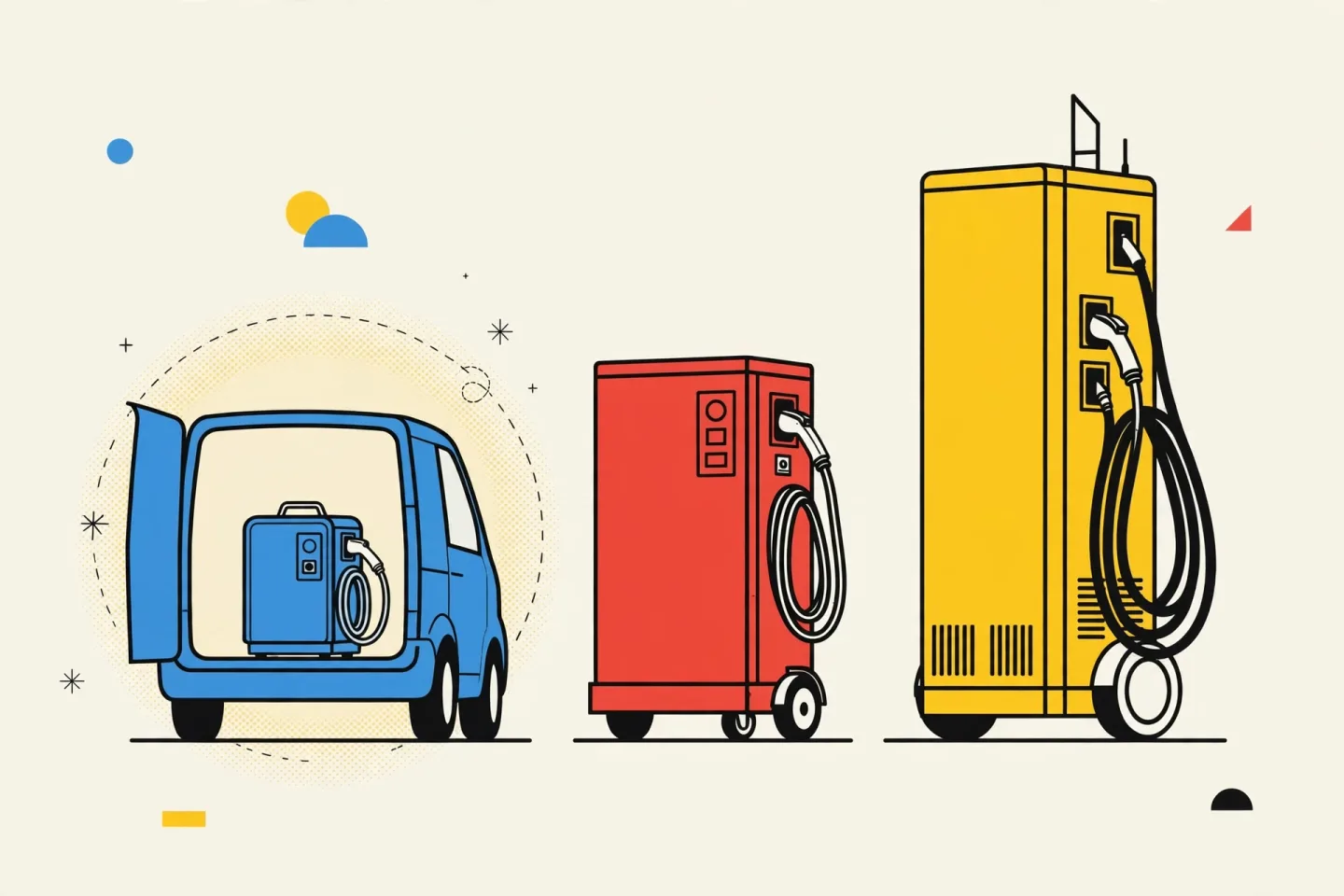
Start with three requirements:
- Energy per rescue: calculate the route to a suitable, available charging point and include an operating reserve.
- Rescues between recharges: divide usable system energy by the energy required per stop. Account for conversion losses, system use, and reserve.
- Vehicle fit: confirm equipment weight, dimensions, mounting, axle loads, cable access, and remaining payload with other service equipment on board.
For example, 60 kWh available at the mobile system output divided by 6.67 kWh per stop gives about nine equal-energy stops before reserve. If 60 kWh refers to the source battery, output conversion losses reduce the energy available. Recharge time also limits daily service volume.
Use the verified model data in the TKMC product comparison. The TKMC-800 and TKMC-1500 are related roadside-rescue options. Confirm the selected configuration; the 20 kW example does not describe their published output ratings.
What should a 20-minute rescue achieve?
Confirm that the added energy is sufficient for the selected route. Check the next charging point, access, compatibility, and availability. Do not assume that 20 km will reach a suitable charger in every service area.
A 20 kW system can be suitable when accepted power, energy per stop, response time, and vehicle fit match the service plan. Weight and payload suitability depend on the actual equipment. They cannot be inferred from the power rating alone.
For a fleet review, send those inputs through the roadside mobile EV charging solution page. TAICO can review the equipment configuration and quotation requirements against your operating needs.
FAQ
Frequently asked questions
How much energy can a 20kW charger deliver in 20 minutes?
At a constant 20 kW output, it delivers 6.67 kWh at the charger output. The energy stored in the EV battery can be lower because of losses and vehicle auxiliary use. Connection time is additional.
How much range can a 20kW mobile DC charger add?
Range depends on usable energy and vehicle consumption. If 6.0 kWh is available for driving and consumption is 20 kWh/100 km, the calculated range is 30 km. These are example inputs, not measured TAICO results. RACV states about 1 km per minute for its announced 20 kW trial.
Can mobile EV charging replace towing?
It can be an option when the vehicle has insufficient energy, can accept a compatible DC charge, and can remain safely at the site. Vehicle faults, damage, unsafe conditions, or insufficient range to the next charging point can require recovery.
How many rescues can a battery-powered mobile charger complete?
Divide the usable energy available from the mobile system by the energy it must supply per rescue. For example, 60 kWh available at the output divided by 6.67 kWh per stop gives about nine stops before an operating reserve. If 60 kWh is measured at the source battery, subtract conversion losses first.