
01
Solution 01 · Mobile response
Mobile EV Charging Solutions for Roadside Rescue
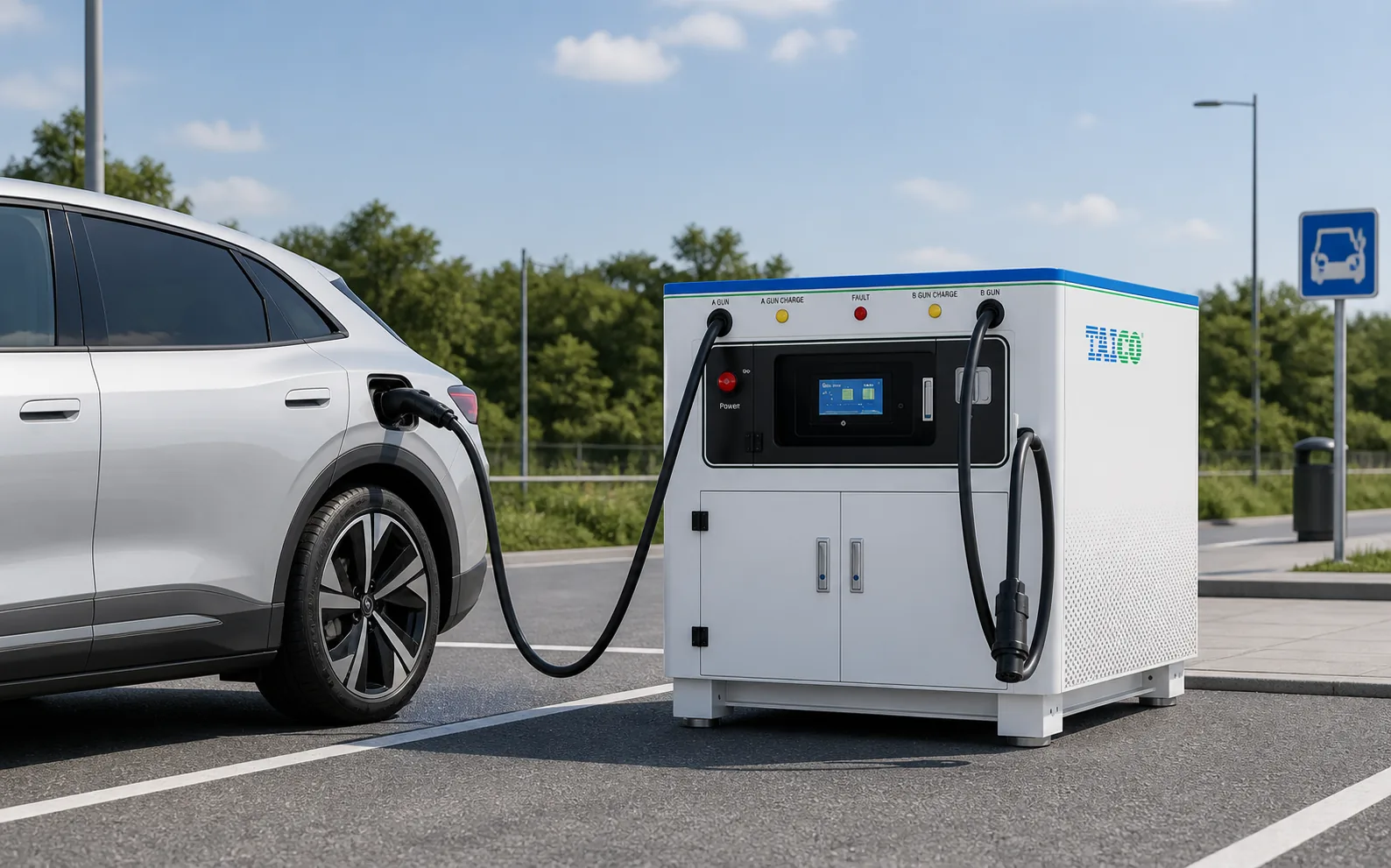
Roadside EV rescue application context. Catalog product photography, not a customer project.
Why mobile charging?
Bring charging capability to the response location.
Roadside rescue operations need a deployment format that follows the vehicle and the service call. These operating constraints shape the initial system configuration.
02
No fixed grid connection at the response location
03
Roadside assistance teams need mobile deployment
04
On-demand charging capacity must move with the service operation
Recommended TKMC configurations
Published starting points for roadside rescue.
Product facts below are read from the published catalog data. Final configuration depends on vehicles, connectors, site supply, and deployment requirements.
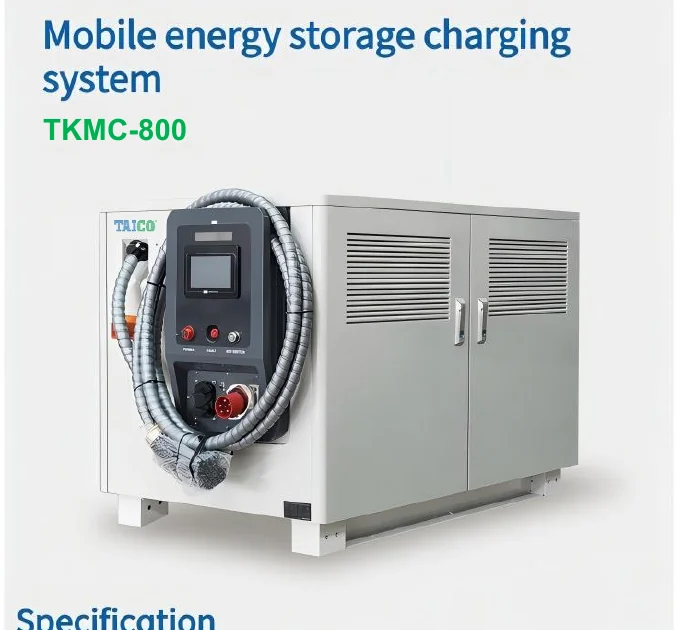
TKMC-800
Mobile Energy Storage Charging System
- Capacity
- 75 kWh
- DC output
- 60 kW
- Primary use
- Mobile Charger · Roadside EV Rescue
- Connector
- GB/T / CCS1 / CCS2 / CHAdeMO
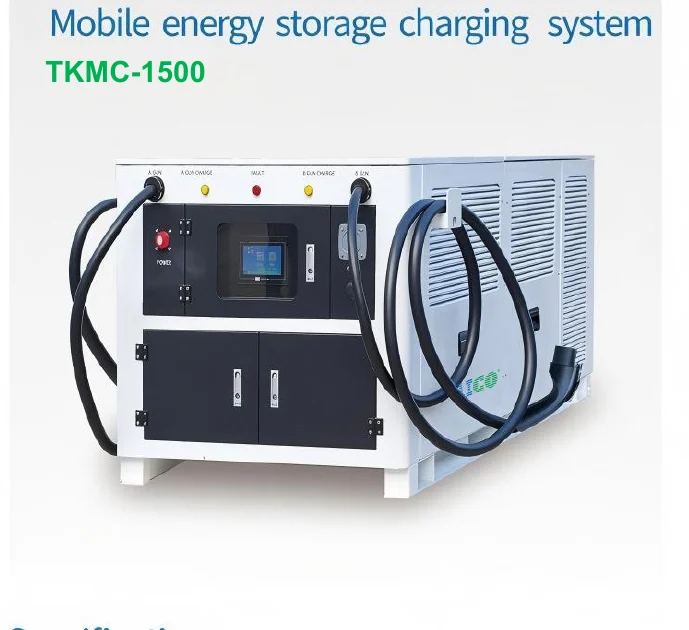
TKMC-1500
Mobile Energy Storage Charging System
- Capacity
- 140 kWh
- DC output
- 120 kW
- Primary use
- Mobile Charger · Roadside EV Rescue
- Connector
- GB/T / CCS1 / CCS2 / CHAdeMO
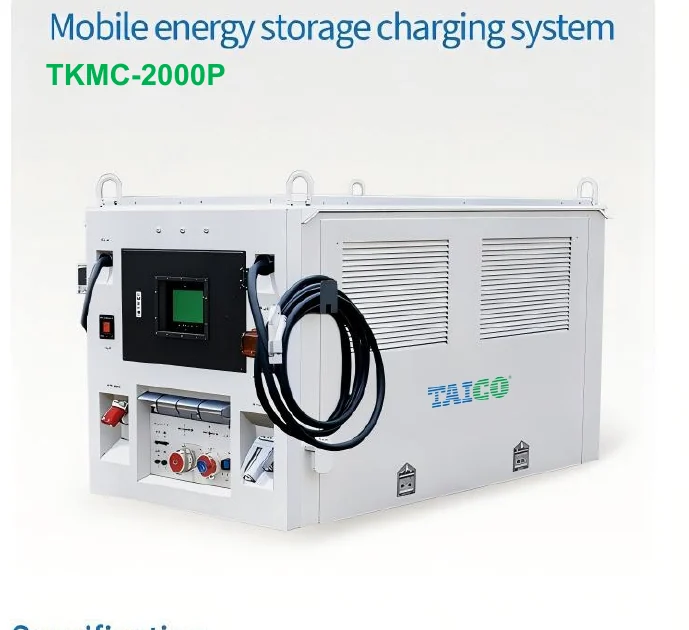
TKMC-2000P
Mobile Energy Storage Charging System
- Capacity
- 200 kWh
- DC output
- 120 kW
- Primary use
- Mobile Charger · AC Output
- Connector
- GB/T ×2 (CCS1 / CCS2 / CHAdeMO)
Broader mobile power / field deployment option; it is not listed as Roadside EV Rescue in the catalog.
View Product →Operating workflow
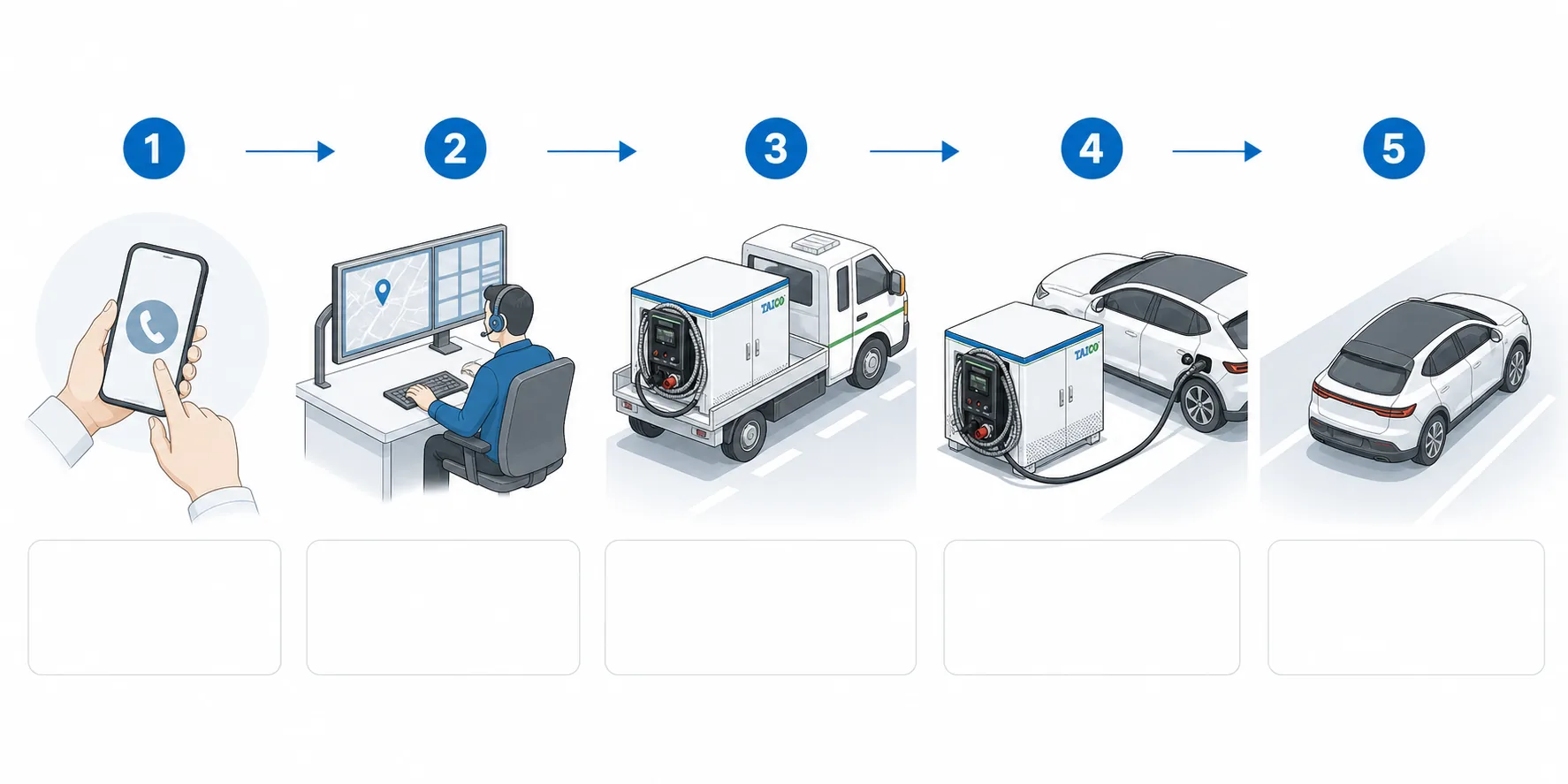
Roadside rescue workflow
A roadside assistance operation can use a mobile charging system as part of its response workflow when a stranded EV is away from a fixed charging bay.
- 01Rescue request received
- 02Mobile charging vehicle reaches stranded EV
- 03Compatible charging connection is established
- 04Emergency energy is delivered
- 05Vehicle continues to a fixed charging location
System capabilities
Configure around the operating context.
+Mobile energy storage charging for field deployment
+DC charging output selected from published model data
+Charging connector options vary by product configuration
+Project-specific configuration review before quotation
FAQ
Roadside rescue charging questions.
How much charging power can the TKMC-800 provide?
The published TKMC-800 product data lists up to 60 kW DC output and 75 kWh battery capacity. Final operating configuration should be confirmed for the project.
Which EV charging connectors are supported?
Connector support depends on the model and configuration. The TKMC-800 lists GB/T / CCS1 / CCS2 / CHAdeMO and the TKMC-1500 lists GB/T / CCS1 / CCS2 / CHAdeMO in the published product data. The TKMC-2000P lists GB/T ×2 (CCS1 / CCS2 / CHAdeMO).
Can a mobile charger support a roadside response away from a fixed charging bay?
The roadside rescue solution is intended for mobile and off-grid deployment scenarios where a fixed charging bay may not be available. Confirm recharge, vehicle, connector, and site requirements with TAICO EV.
Related reading
Understand the decision first.
Buyer guide
Mobile EV Charger Buyer’s Guide: How to Choose a System
A practical buyer's guide to mobile EV charging formats, energy and power requirements, connectors, deployment conditions, and project qualification.
Technical explainer
kW vs. kWh in Mobile EV Charging
Understand the difference between charging power and stored energy, and why both values matter when specifying a mobile EV charging system.
Operating workflow
How Roadside EV Charging Works: A 5-Step Rescue Workflow
A five-stage operating framework for dispatching a mobile charging system, confirming the vehicle connection, delivering emergency energy, and completing the handoff.
Related products and resources
Continue with the catalog.
TKMC-800
Mobile charging system with published roadside EV rescue use.
TKMC-1500
Mobile charging system with published roadside EV rescue use.
TKMC-2000P
Broader mobile power and AC output option for field deployment.
Mobile EV Charging Buyer's Guide
Qualify the operating scenario, energy, power, connectors, and deployment format.
Product Comparison
Compare published capacity and output power across the TKMC range.
Request a system configuration
Share vehicle, connector, site, and deployment requirements with TAICO EV.
Other solutions
On-Demand Charging
Move charging capability to the vehicle instead of reserving a fixed bay.
AC Output / E-Generator
Combine mobile EV charging with AC output for E-Generator applications.
Engineering Power Supply
Use mobile energy storage charging for engineering power supply applications.
PV Storage Charger
Use mobile energy storage charging for PV-storage charging applications.
PV-Storage Charging Station / Grid Complementary System
Build charging capacity around energy storage, solar input, and the available grid connection.
Signal · Request
Request a roadside rescue system configuration
Share your site constraints, vehicle mix, and deployment timeline. We will map a mobile energy solution.