Buyer guide
Mobile EV Charger Buyer’s Guide: How to Choose a System
A practical buyer's guide to mobile EV charging formats, energy and power requirements, connectors, deployment conditions, and project qualification.
 TAICO EVBeyond the Grid
Solution 03 · Field deployment
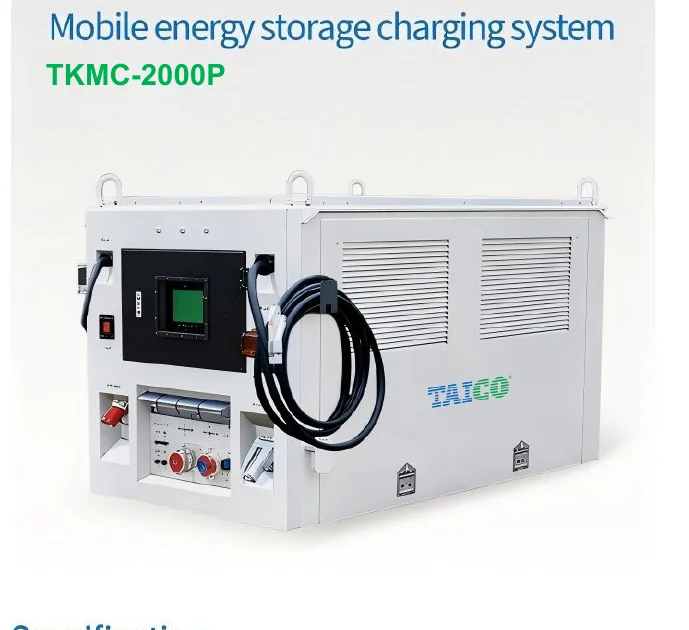
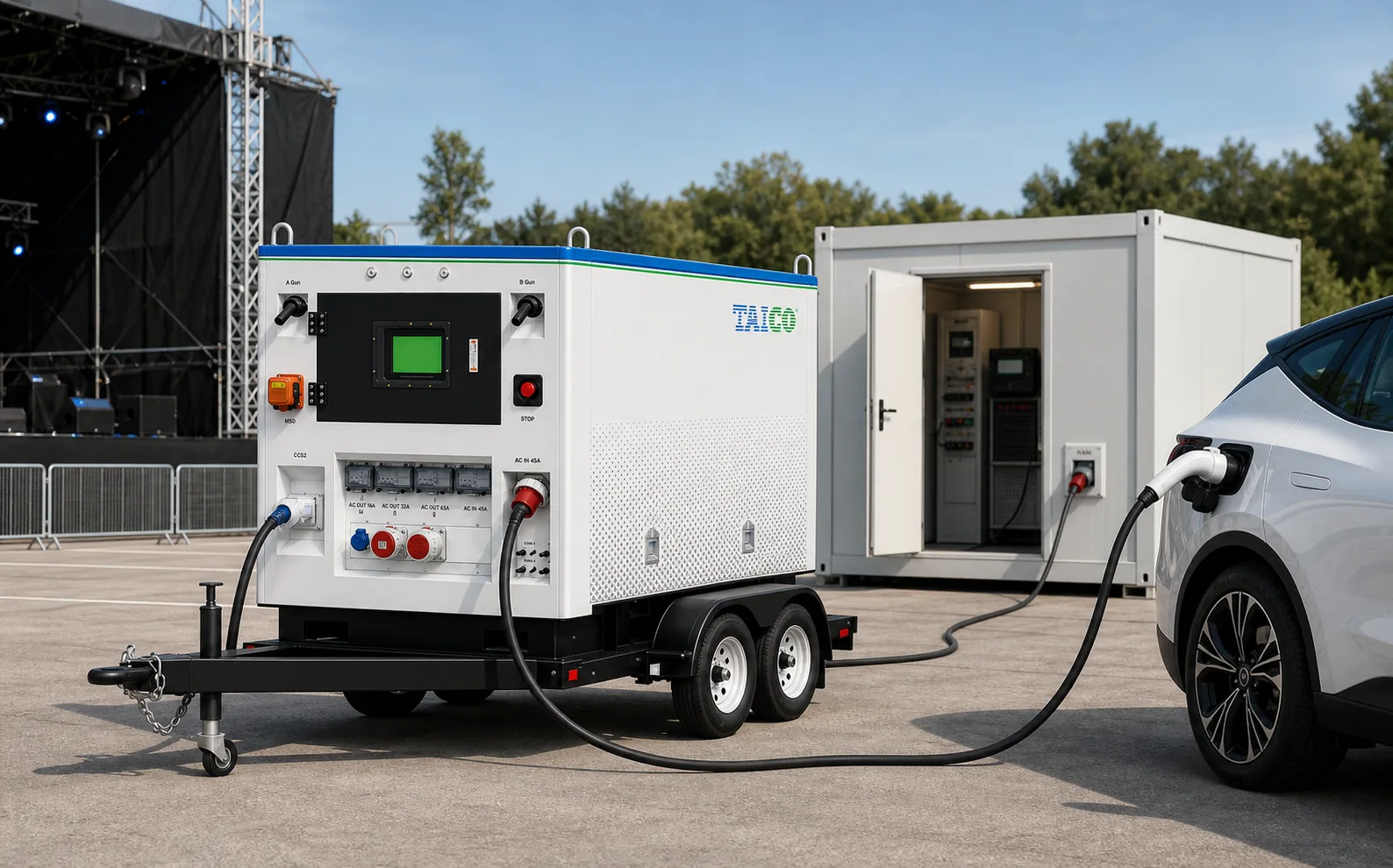
AC output / E-generator application context. Catalog product photography, not a customer project.
Operating constraints
Configuration path
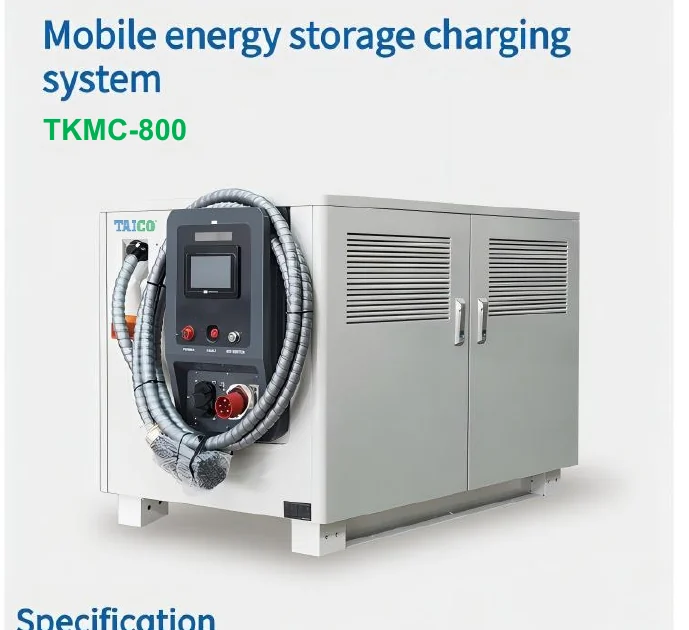
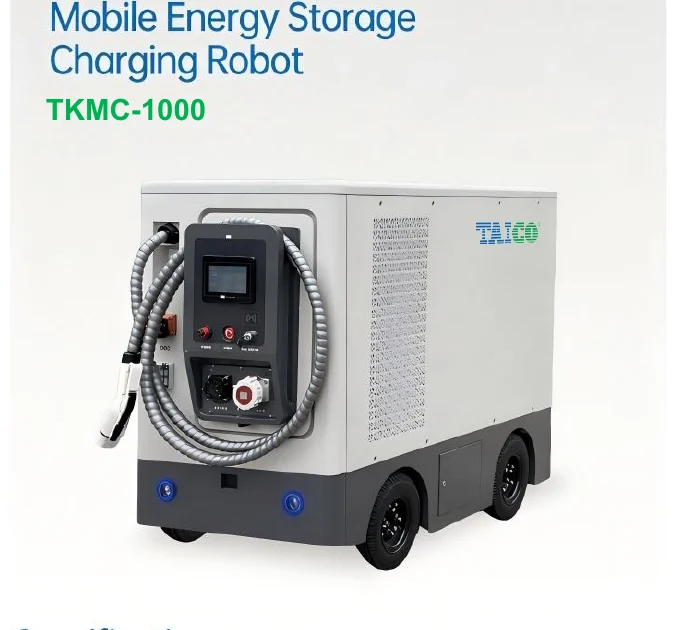
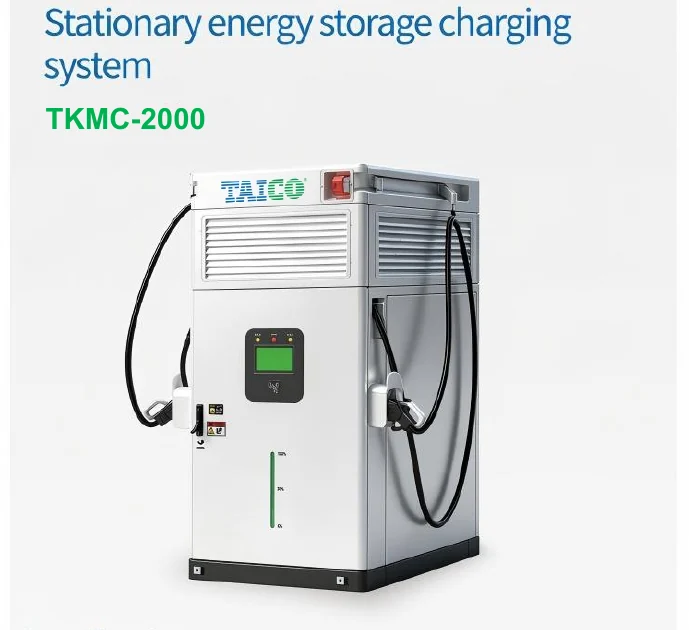
Initial product match
Initial match only. Final configuration depends on vehicles, daily energy demand, site supply, and deployment requirements.
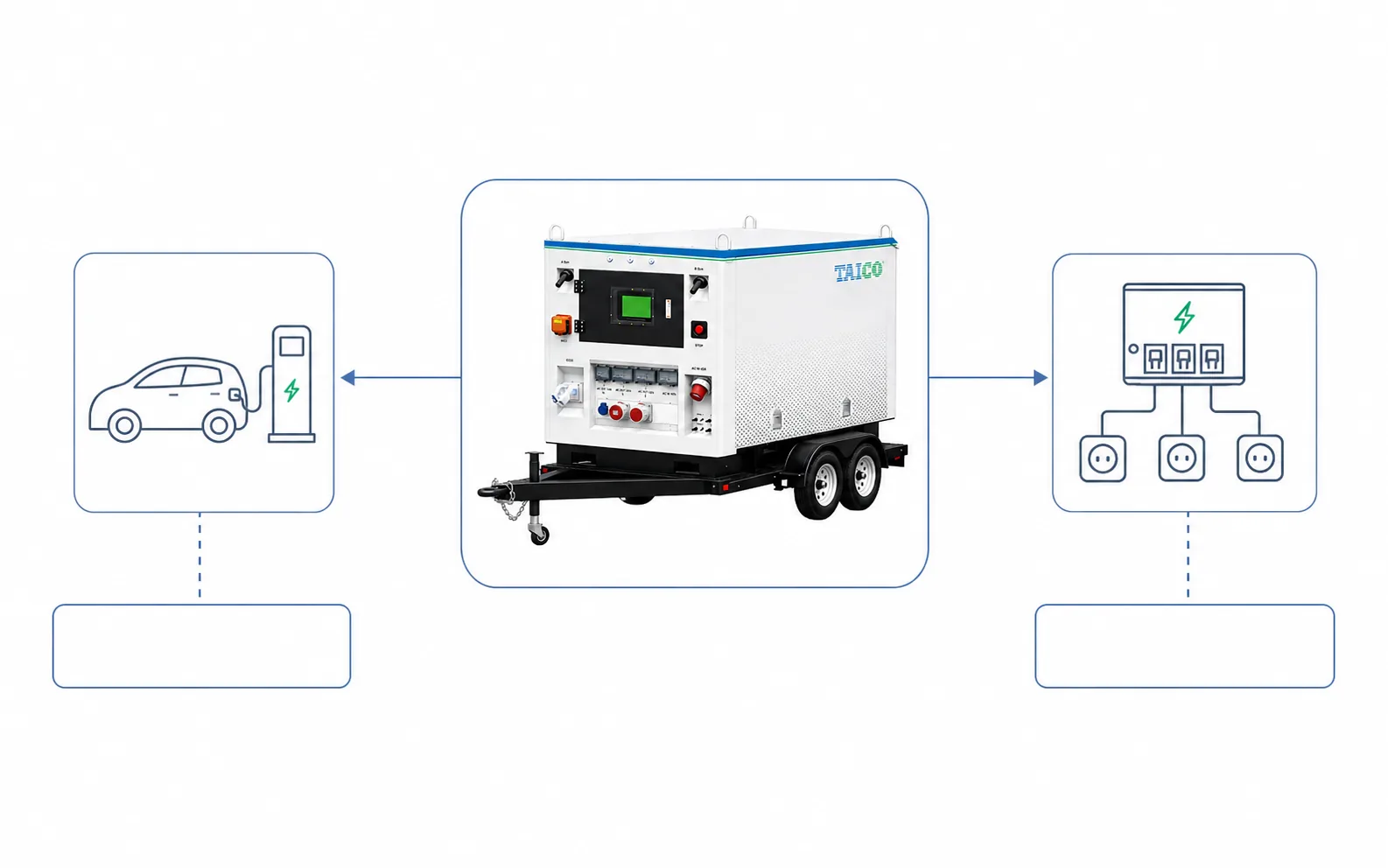
System diagram
FAQ
Systems such as the TKMC-2000P combine DC fast charging (up to 120 kW) with AC single-phase and three-phase output for dual-use E-Generator applications.
Depending on the model, recharge can be supplied from an EV DC charger or a standard AC three-phase supply.
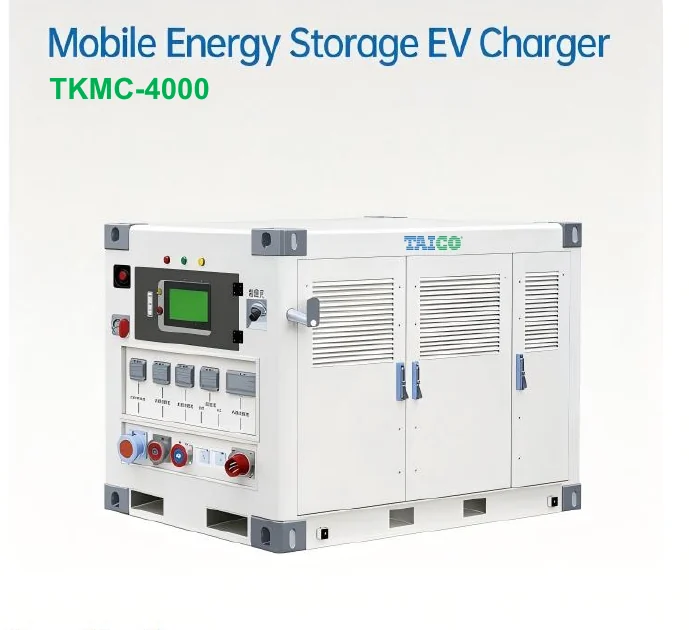
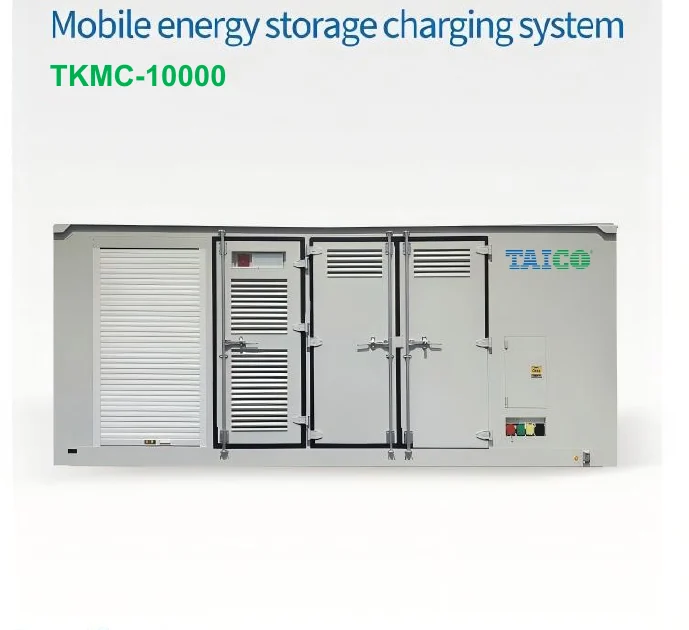
The published catalog range covers 200 kWh (TKMC-2000P), 400 kWh (TKMC-4000), and up to 1000 kWh (TKMC-10000) storage capacities.
Related reading
Buyer guide
A practical buyer's guide to mobile EV charging formats, energy and power requirements, connectors, deployment conditions, and project qualification.
Technical explainer
Understand the difference between charging power and stored energy, and why both values matter when specifying a mobile EV charging system.
Other solutions
Bring charging capability to the vehicle when fixed charging infrastructure cannot reach it.
Move charging capability to the vehicle instead of reserving a fixed bay.
Use mobile energy storage charging for engineering power supply applications.
Use mobile energy storage charging for PV-storage charging applications.
Build charging capacity around energy storage, solar input, and the available grid connection.
Signal · Request
Share your site constraints, vehicle mix, and deployment timeline. We will map a mobile energy solution.