
At a glance
Quick answer
Before requesting a quote for mobile EV chargers for tow trucks, confirm payload and mounting, dimensions and access, vehicle and connector compatibility, the target energy handoff, recharge source, operating procedure, and the target market.
Tow-truck operators evaluating mobile EV chargers need to qualify two systems at the same time: the charging equipment and the transport vehicle that carries it. A catalog match is only a starting point. The equipment brief should connect the target roadside service, vehicle and connector mix, energy handoff, transport constraints, and recharge plan.
This checklist is for equipment procurement and configuration review. It does not claim that a model fits every tow truck, that every EV can be charged, or that a roadside response has a fixed time, range, or cost outcome.
Start with the transport vehicle
Record the tow-truck or response-vehicle details before comparing mobile charging systems:
- Available payload and the responsible vehicle or engineering review
- Deck, compartment, or mounting dimensions and the usable access path
- Loading, unloading, securing, and cable-handling approach
- Vehicle height, width, turning, ground, and roadside positioning constraints
- How the unit will be protected, inspected, and returned to service after transport
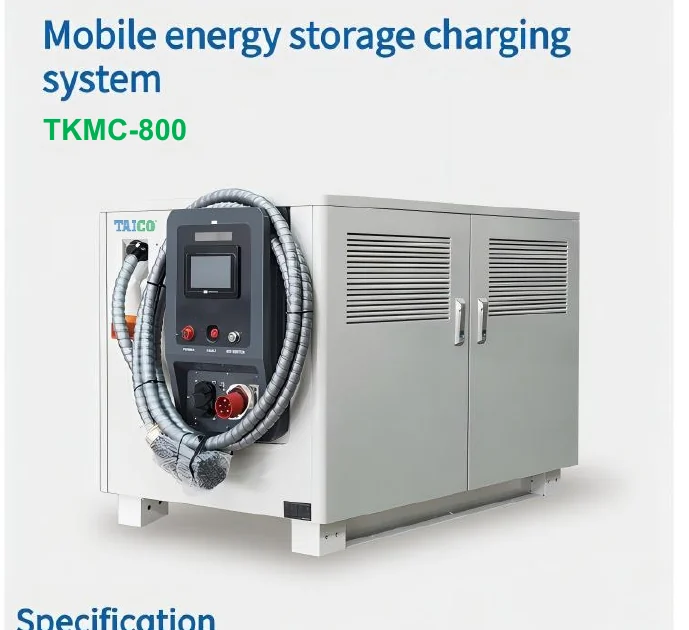
The published TKMC-800 specifications and TKMC-1500 specifications provide equipment dimensions and weight for comparison. They do not establish fit on a particular transport vehicle. Confirm the transport arrangement as part of the project configuration.
Confirm the EV and connector requirement
Create a vehicle-and-connector matrix for the service territory. Record the expected vehicle types, connector standard, voltage range, cable reach, and any vehicle-side condition that could prevent a charging session.
Connector support depends on the selected model and configuration. The Emergency EV Charging Solutions for Roadside Rescue page and its linked product pages provide the catalog-backed starting points; they should be reviewed against the actual vehicle mix before quotation.
Define the energy and power plan
Separate the energy question from the power question:
- Define the target energy handoff for one response.
- Estimate the expected number of responses in an operating period.
- Set a reserve policy for the mobile storage system between dispatches and recharge.
- Apply a conversion and operating-loss allowance to planning energy.
- Compare the resulting requirement with published capacity and output power.
The kW vs. kWh planning guide explains why output power and stored energy answer different procurement questions. Its worked arithmetic is hypothetical and should not be treated as a model-specific service promise.
Check recharge and turnaround
The equipment request should state where the mobile system will be recharged, which supply is available, how long the unit can remain at the recharge location, and what turnaround the service operation needs between deployments. Confirm the recharge path, site supply, access, and operating procedure for the selected model.
Do not infer a service volume from nameplate capacity alone. The available energy depends on reserve policy, conversion, operating conditions, response requirements, and the approved project configuration.
Document the roadside operating procedure
Procurement should include the information the operator needs to turn a unit into a repeatable response workflow:
- Request intake and dispatch criteria
- Vehicle and connector verification
- Positioning, access, traffic, weather, and working-space checks
- Connection, session stop, and energy-handoff rules
- Handoff to a fixed charging location or recovery path
- Disconnect, inspection, reset, and recharge records
- Training and responsibility for approving the local procedure
Use the roadside EV charging workflow as a planning reference. It is not a universal safety procedure and does not replace the operator’s approved process.
Prepare the quotation brief
Send one concise brief with:
- Target market and applicable project requirements
- Transport vehicle, payload, mounting, securing, and access details
- Target vehicle types, connector standards, and voltage range
- Expected responses or charging sessions per operating period
- Intended energy handoff and destination after the response
- Reserve policy, recharge source, and turnaround time
- Required data, communications, or charging-management functions
- Any requirement that is still unknown and needs confirmation
This gives TAICO EV enough context to review the published catalog starting points and identify which details still need confirmation before quotation.
Catalog references
- Emergency EV Charging Solutions for Roadside Rescue
- TKMC-800 product page
- TKMC-1500 product page
- TKMC product comparison
- Mobile EV Charging vs. Towing decision guide
FAQ
Frequently asked questions
Can any mobile EV charger be mounted on a tow truck?
No universal mounting or transport fit should be assumed. Confirm the selected unit's dimensions, weight, payload, access, securing method, and responsible engineering review for the specific transport vehicle.
Which product details should a tow-truck buyer compare?
Compare published battery capacity, output power, voltage and current, connector and cable length, dimensions, weight, protection level, recharge path, and catalog application. Then confirm the final configuration against the operating plan.
What should an equipment request include?
Include the target market, transport vehicle, payload and mounting constraints, vehicle and connector mix, expected responses, target energy handoff, recharge source and turnaround, access conditions, operator procedure, and any data or charging-management needs.